

Blog Post, Case Studies
Ultrasonic Sensors for Multiple Automation Industries: Beyond Level Measurement
Ultrasonic sensors emit sound waves and use time-of-flight calculations to determine the distance from the sensor to the surface being measured. APG’s ultrasonic sensors are most often used for level measurement, especially in tanks, water/wastewater, and chemical applications, but ultrasonic sensors are also well suited for object detection and industrial automation.
Ultrasonic sensors are versatile tools that can be used across industries. They offer non-contact precision and can measure anything that will reflect sound waves. They also require very little maintenance and will keep ticking for years.
Two examples illustrate the versatility of ultrasonic sensors: one in automated manufacturing where precise material measurement prevents downtime, and one in tunnel carwashes where real-time vehicle profiling enables a fully automated wash cycle.
Rolled Material Monitoring 
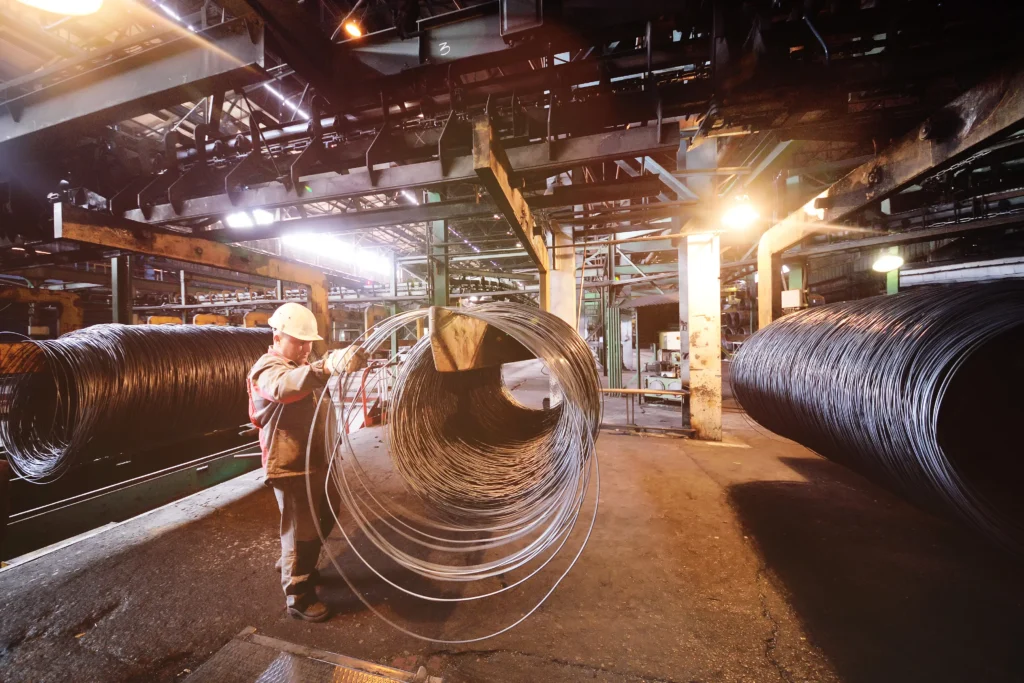
Many materials are stored on rolls, from household goods like parchment paper or food-grade plastic wrap to industrial goods like sheet metal or wire. In the manufacturing process, rolled materials need to be precisely measured to ensure correct inventory management and avoid downtime.
Ultrasonic sensors are ideal for measuring rolled materials. Many rolled materials are sensitive to damage, so a non-contact solution is advantageous. Non-contact also means less sensor wear-and-tear and lower maintenance needs, saving both money and time.
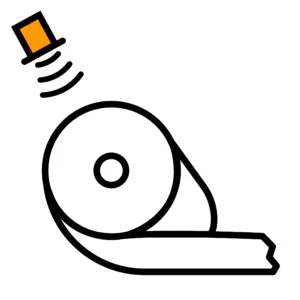
Ultrasonic sensors can be mounted in different orientations, depending on the information needed to keep things rolling smoothly. Here are a few examples:
- Mounted perpendicular to the roll: Measure the distance from the ultrasonic sensor to the rolled material to calculate the amount of material on the roll.
- Mounted facing the edge of the roll: Detect when the material becomes misaligned, allowing problems to be noticed before they spiral out of control.
- Mounted facing the material winding or unwinding: Detect material slack, preventing product damage or production line downtime.
Carwash Automation
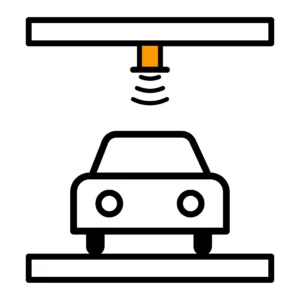
Ultrasonic sensors are often used for vehicle profiling to identify the type of vehicle entering the carwash (sedan, van, pickup truck, etc.), the location of the side mirrors, and the height of the roof. This allows the system to automatically adjust the brushes to avoid putting too much pressure on the side mirrors and to avoid wasting cleaner in open pickup beds. Real-time adaptability prevents damage to both vehicles and equipment.
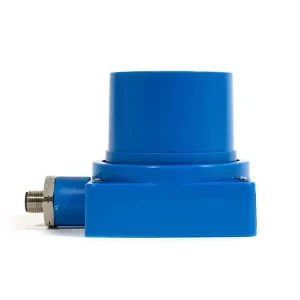
APG’s IRU-2000 ultrasonic sensor is designed for object detection and profiling. It is rated for use in high-moisture environments such as tunnel carwashes, making it an ideal solution for carwash applications. To ensure a thorough and customized wash, multiple IRU-2000 ultrasonic sensors are strategically placed throughout the system:
- Entrance Detection: A sensor at the wash bay entrance detects when a vehicle arrives, triggering the automated process.
- Vehicle Profiling: Additional sensors, positioned at different angles, measure the vehicle’s height, width, and length. This data enables precise control of brushes, sprayers, and dryers for a tailored wash experience.
- Real-time adjustments: The collected data is transmitted to the wash system’s controller, optimizing the cleaning process for each vehicle.
Choosing a Sensor
Ultrasonic sensors offer several advantages over other non-contact measuring devices in automation. Ultrasonic waves can reflect off surfaces regardless of color, transparency, or dielectric constant. Photoelectric sensors may struggle with transparent or very dark surfaces, and radar sensors may struggle with some low-dielectric plastics. Additionally, ultrasonic sensors can withstand humid and dusty environments where lidar or IR sensors would struggle.
There are a few things to keep in mind when selecting an ultrasonic sensor for an industrial automation application. It’s important to choose a sensor with a range that will cover both empty and full conditions. Keep in mind minimum distance a sensor can measure, known as the blind zone. Additionally, if the facility is very dusty, choose a sensor with a fully enclosed body so dust can’t interfere with the electronics.
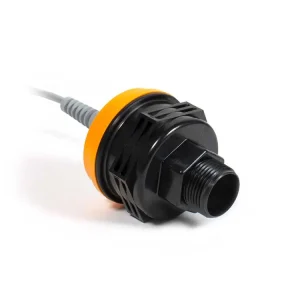
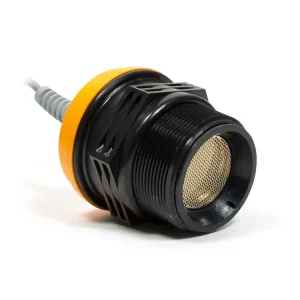
- For close-distance measuring: IRU-5000 with a range of 4 in. to 79 in.
- For higher sensitivity in dust-free environments: IRU-9400 with a range of 6 in. to 35 ft
- For clock synchronization feature to avoid crosstalk interference: IRU-2000 with a range of 1 ft to 25 ft (commonly used in car wash applications)
For a full breakdown of APG’s ultrasonic lineup, check out this product guide.
Conclusion
Across industries, operators are looking for ways to improve efficiency and reduce costs. From rolled material monitoring to car wash automation, these examples barely scratch the surface of how ultrasonic sensors enable automation by providing durable, precise non-contact measurement. The versatility and reliability offered by ultrasonics make them an excellent choice for object detection and distance measurement in multiple industries.
Need help deciding what kind of sensor to use for your application? Contact our measurement experts today.
To learn more about other ultrasonic sensor applications, check out this academic review article.
WRITTEN BY

Nicole K.
Nicole King-Brown is APG’s Engineering Technical Writer. She is a Utah State University alum with a background in scientific communication. She works closely with APG’s engineers as they develop new products.