



Automation Products Group Inc. (APG) has been in the industrial level sensing business for over 40 years now and one of the biggest challenges facing our customers is chemical compatibility. Between tough chemicals, extreme temperatures, and hazardous fumes, choosing the right sensor for the job can be tricky.
The wrong sensor material in the wrong place can have disastrous – and expensive – results. Here are some tips to avoid trouble in your chemical level application.
Do: Use a chemical compatibility chart
Compatibility charts are a simple tool to help you choose what kind of materials can be combined. If you know the chemical makeup of the material to be measured, you can select an appropriate sensor material that won’t fail prematurely. Most chemical compatibility charts compare two materials (such as ammonia and 316SS) at room temperature (70F) and give it a grade from A to D.
- A means that it has excellent compatibility and the materials will not react.
- B means the materials have good compatibility. There may be some discoloration or slight damage over time.
- C means the materials have fair compatibility. There may be softening, loss of strength, and other damage, depending on the amount of exposure. It is not recommended to use those materials together.
- D means the materials have poor compatibility. The materials will degrade. It is not recommended to use those materials together for any period of time.
Referencing a compatibility chart before choosing a sensor can save a lot of time and money early on. You can check out our free compatibility chart here.
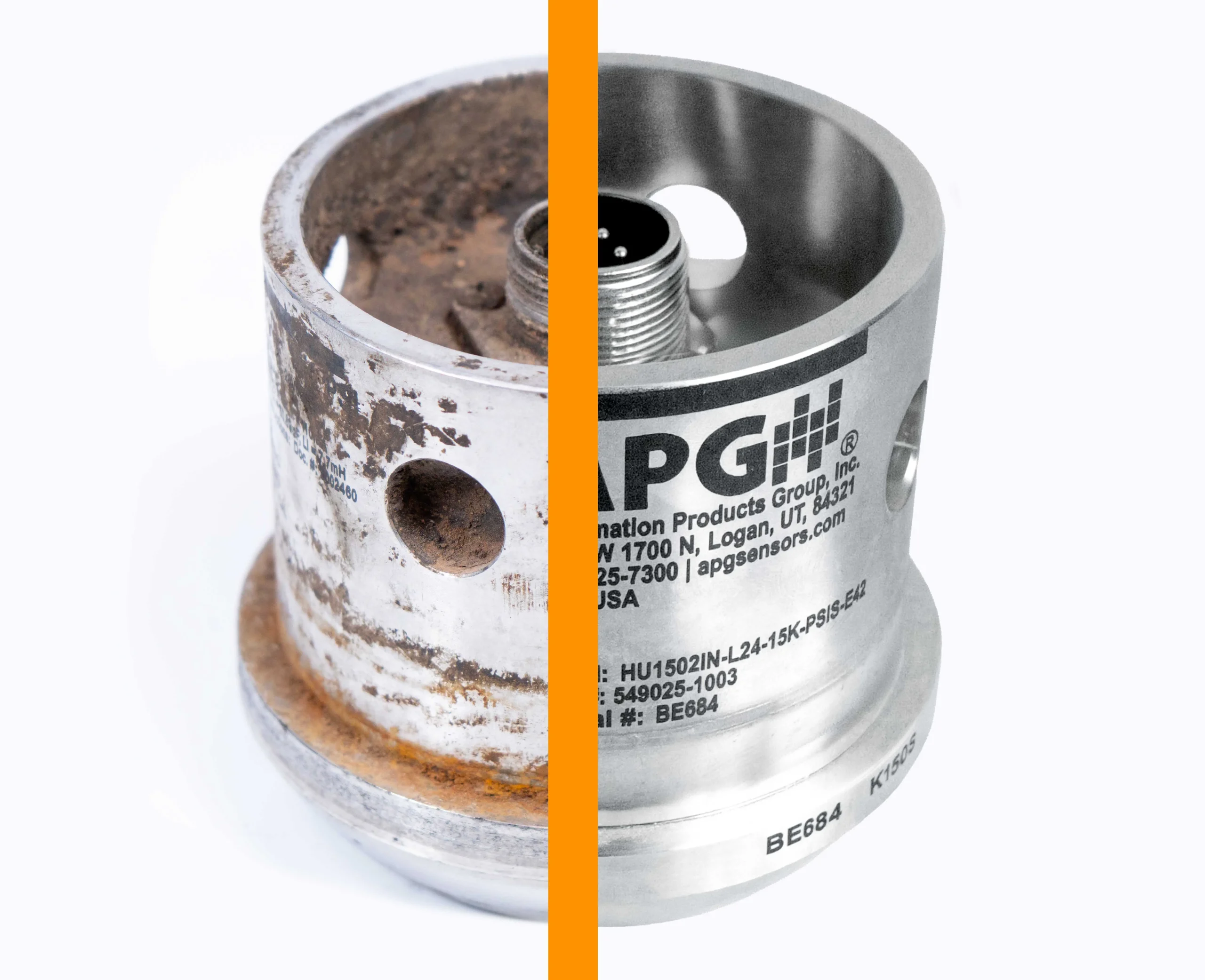
Don’t: Forget that temperature changes compatibility
A common pitfall in chemical compatibility is temperature. Most chemical compatibility charts show compatibility only at a certain temperature, usually around 70°F (21° C). But when temperatures rise, two materials that were compatible may start reacting to each other.
For example: Sodium hydroxide (caustic soda) has good compatibility with stainless steel at normal temperatures. A tank full of a sodium hydroxide solution was monitored with a stainless steel FS-500 float switch. During cold weather, heaters were used to keep the solution from freezing. Unfortunately, the heat tracing system malfunctioned and the heater failed to turn off. It continued to heat the liquid to extreme temperatures, which caused the stainless steel float switch to develop catastrophic stress fractures.
Do: Consider non-contact options when application allows
Non-contact sensors such as ultrasonics and radars can be mounted above the material being measured and provide accurate measurement without submerging the sensor in potentially corrosive material. Ultrasonics are a reliable option that are best used when there is a clear line of sight to the medium and there is no heavy foam or vapor present.
Radars are also a good option when there is a clear line of sight, especially because they aren’t bothered by foam or vapor. APG’s TRUE ECHO CR-L radar liquid level sensor can even see through some types of plastic, allowing it to be installed outside chemical containers. It comes with both PE and PVDF body types to fit your specific application. This true non-contact method is especially effective for storage containers.
Don’t: Forget to check all wetted materials for compatibility
Don’t forget to check the chemical compatibility of all exposed parts of the sensor, including the cable. This is especially important for submersible sensors where every part of the sensor is in contact with the measured material.
In some cases, the material may off-gas corrosive chemicals. If the sensor face is made of a compatible material but the mounting threads are not, corrosive gas can cause sensor failure as the threads weaken over time. Additionally, liquids may splash up and come into contact with the sensor face or body. Ensuring chemical compatibility with the entire sensor is critical for sensor longevity.
Do: Refer to SDS and product user manuals when available
The Safety Data Sheet (SDS) provides information about a chemical’s hazards and incompatibilities. It is a useful resource for maintaining safe environments, and you should refer to it whenever it is available. Not all applications will have SDS information, such as leachate ponds that collect an unknowable combination of toxic chemicals.
The sensor’s user manual includes important installation information. Following the installation instructions can keep you safe and will improve the lifespan of your sensor. Refer to the wiring diagrams – particularly in hazardous locations – to ensure your sensor is connected properly.
You can find all APG sensors’ user manuals here and datasheets here. Each sensor’s product page also includes all relevant documents. If you have questions about a sensor’s wetted parts or chemical compatibility, you can contact us for more information.
Conclusion
Choosing the correct sensor for your level measurement is critical in a chemical application. The wrong type or material can result in hazardous conditions and money wasted. When in doubt, test your sensors in the environment before doing a full system installation.
Questions? Contact our level measurement experts today!
WRITTEN BY

Nicole K.
Nicole King-Brown is APG’s Engineering Technical Writer. She is a Utah State University alum with a background in scientific communication. She works closely with APG’s engineers as they develop new products.