


Key Takeaways:
- Planned preventative maintenance can save you time and money down the road.
- APG ultrasonic level sensors are designed to be low maintenance, but all equipment benefits from occasional attention.
- Things to check: buildup, corrosion, calibration, and alignment.
One of the appeals of ultrasonic sensors is that they are non-contact and therefore don’t get exposed to the same level of grime that other kinds of sensors get. While this does reduce their maintenance needs, it does not eliminate the need entirely. When was the last time you inspected your ultrasonic level sensor?
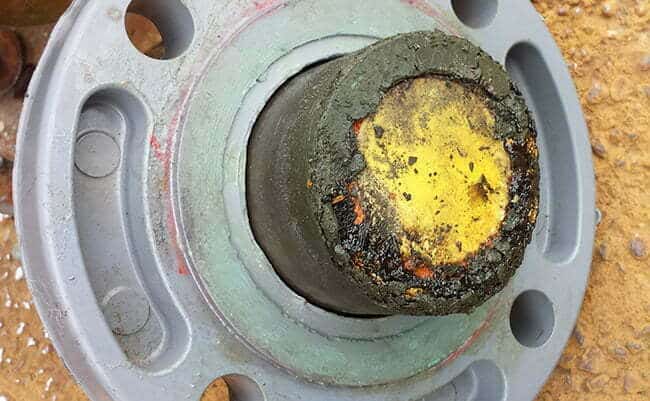
Your ultrasonic sensor has three main enemies: corrosion, build up, and extreme temperature changes. While all three relate to the general environment of the sensor, the first two are linked directly to the substance being monitored (for sensors within an enclosure, such as a tank).
If your sensor has sustained exposure to corrosive fumes, or solid or liquid buildup is likely to form on your sensor, then preventative maintenance must be scheduled at regular intervals. A sensor exposed to extreme temperature changes may have condensation or even ice crystals form on the face of the sensor.
Inspecting your ultrasonics regularly will help you catch problems early and prevent avoidable downtime. An inspection doesn’t need to take more than a few minutes to remove build-up, check for corrosion, and confirm that the calibration and alignment are correct.
Giving Your Ultrasonic Sensor a Once-Over
Let’s review the basics. To operate properly, an ultrasonic sensor needs a clear path from the transducer face to the surface it is monitoring. If there is some kind of solid buildup or liquid condensation on the face of the transducer, your sensor’s readings will be noticeably off.
But what about the sides of the transducer? If your ultrasonic sensor has an extruded face, buildup can accumulate on its sides. Since the ultrasonic waves aren’t travelling out those sides, you won’t have erroneous readings to tip you off to the presence of that buildup. This means it’s not too big of a problem unless, A, the buildup is corrosive and will eat through the side walls of the sensor; or B, the buildup is substantial enough that it will prevent you from removing the ultrasonic, or threatens to extend into the path of the ultrasonic waves. If the buildup is potentially corrosive, verify chemical compatibility, because there might be better sensor options for certain chemicals. If substantial buildup is a concern, then periodic visual inspections are in order.
Extreme Temperatures and Calibration
Extreme temperature changes can affect your ultrasonic in two ways: first, temperature changes can cause condensation to form on the transducer face of an ultrasonic sensor, which leads to erratic and erroneous readings. Second, because sound waves physically travel through air, changes in temperature and humidity change the speed at which the waves travel, which, in turn, affects the calibration of an ultrasonic sensor (i.e., distance = speed * time, so uncompensated change in speed means incorrect calculated distance).
So how does this impact maintenance? If your ultrasonic is subject to infrequent extreme temperature changes, you will probably want to recalibrate the sensor after an extreme event. However, if your sensor is subject to regular large temperature swings, you will want to do your initial calibration at a temperature as close to the regular or anticipated temperature as possible. For example, daily temperature swings at APG’s headquarters in Logan, Utah are in excess of 30 degrees Fahrenheit. Rather than recalibrate at the peak temperature of every day, it would be better to calibrate an outdoor sensor during the mid-morning or evening, close to the average daily temperature.
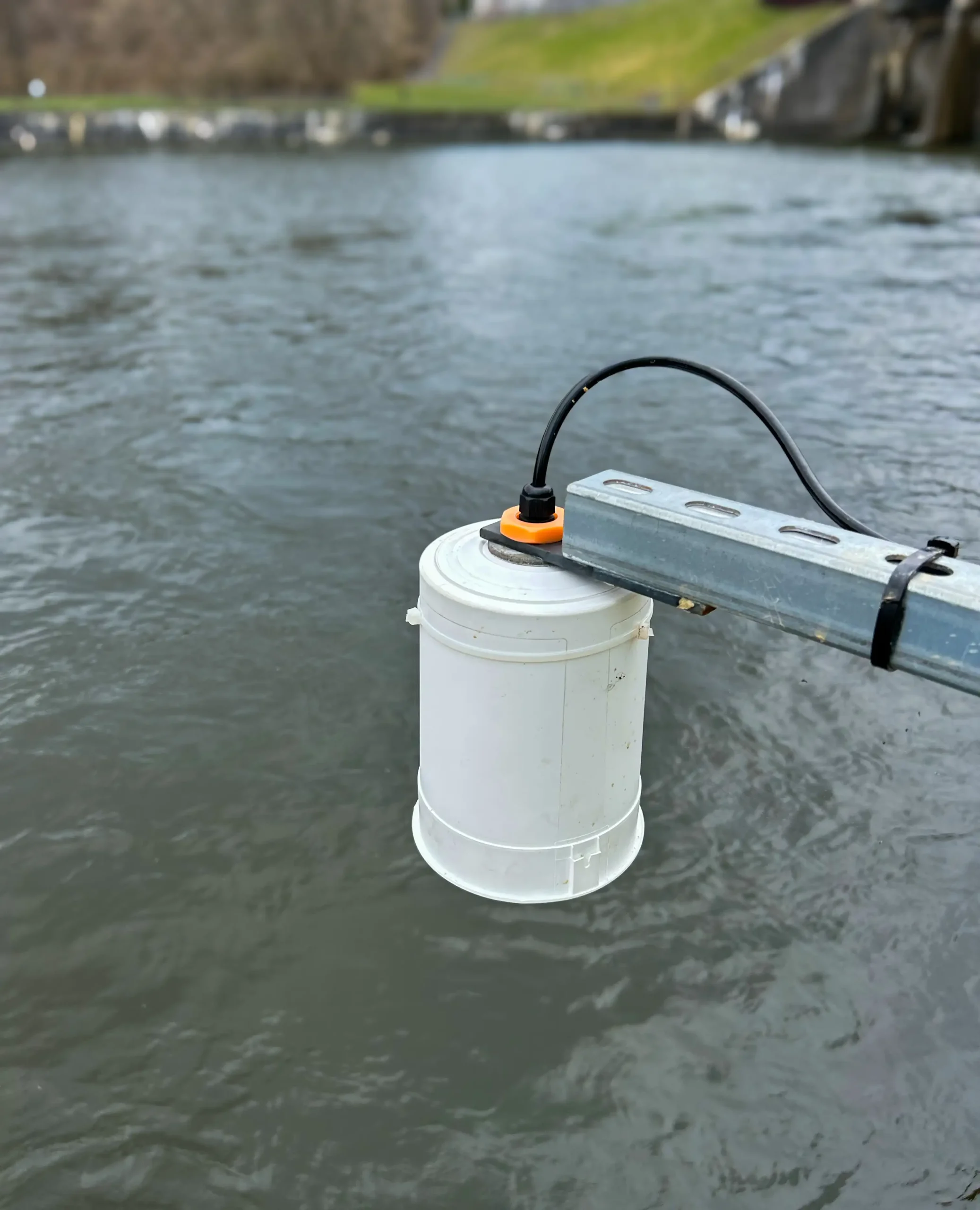 If your ultrasonic sensor is installed outdoors, the easiest way to protect it from the elements and extreme temperature swings is simply to keep it covered. Installing a box or shade to keep the sensor housing out of direct sunlight will prevent temperature overcompensation and keep the electronics from overheating.
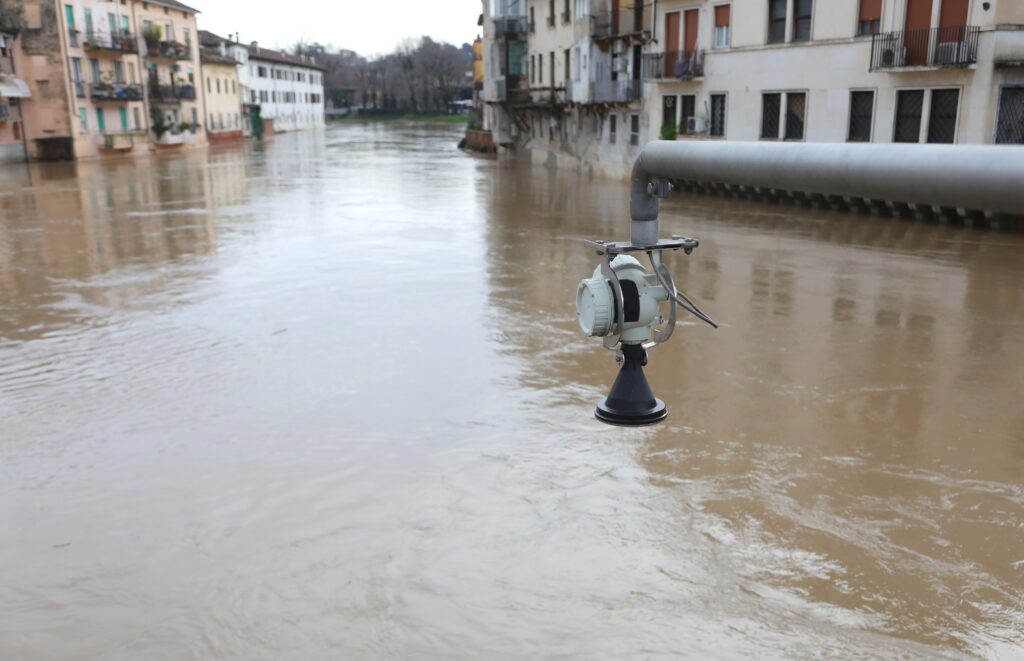
Another potential problem is the temperature gradient between the sensor and the target substance, such as a sensor on a bridge measuring cold river water. The water temperature will change the temperature of the air close to the surface of the water, so the ultrasonic sensor needs to be calibrated to account for this.
So, do ultrasonic sensors with temperature compensation need to be recalibrated in these situations? Temperature compensation helps mitigate the effects of changing temperatures and should always be enabled if it’s an option. It’s especially helpful for situations where a sensor penetrates an enclosure kept at a temperature significantly higher or lower than its surrounding environment. But temperature compensation is not a magic bullet; it doesn’t solve every problem.
Conclusion
Regular inspections only need to take a few minutes and can save you from the headache of unexpected sensor failure. Checking for buildup will improve the life of your sensor and save you money in the long-term. It will also help you identify corrosion before it becomes a big problem.
To sign up for reminders to recalibrate your sensor, fill out this form to get scheduled email reminders. If you find any problems with your sensor during an inspection, contact APG’s helpful experts to get help with recalibration or repairs.
For more information about testing your ultrasonic, check out this helpful guide: Ultrasonic Test Settings.
WRITTEN BY

Nicole K.
Nicole King-Brown is APG’s Engineering Technical Writer. She is a Utah State University alum with a background in scientific communication. She works closely with APG’s engineers as they develop new products.