


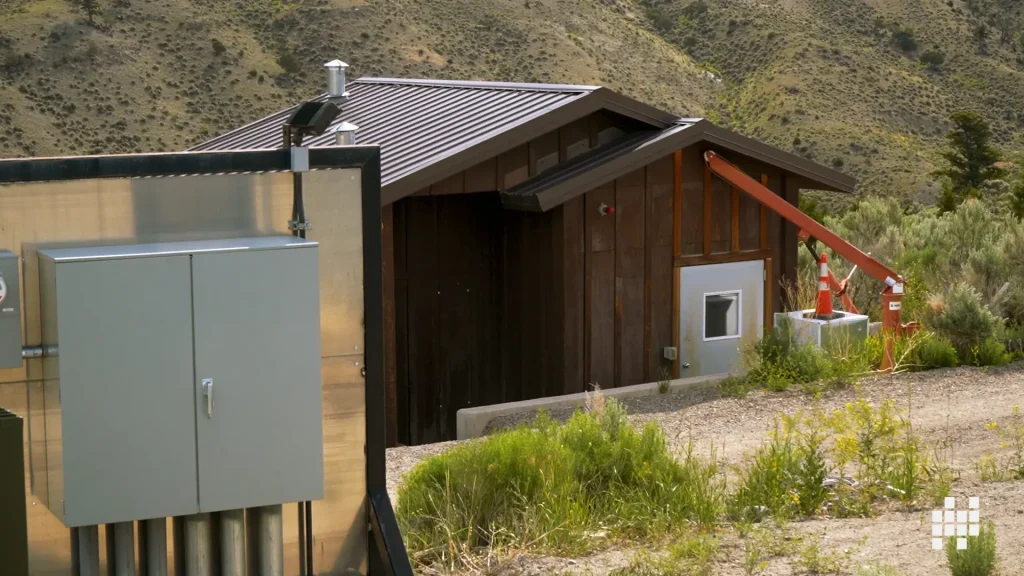
Lift stations are critical systems designed to move wastewater from lower to higher elevations. They use pumps to move water from low wet wells to processing facilities. System managers need regular, up-to-date information about what is going on inside their lift stations to avoid a wastewater emergency. Continuous level measurement can provide critical data to avert disasters.
Continuous measurement in a lift station can come from a variety of transducers including ultrasonic, radar, level probes, and submersible pressure transducers. Each sensor technology has pros and cons. Let’s talk about the benefits and challenges of using a submersible pressure transducer.
When to use a Submersible Pressure Transducer
Non-contact transducers, such as ultrasonics and radars, are common options in situations where the material being measured is unpleasant, such as untreated wastewater. However, sometimes non-contact transducers aren’t a viable option. Tight spaces, pipes, and ladders can make ultrasonics and radars less effective. A rugged submersible pressure transducer can do the job when those options fail.
Submersible pressure transducers are a very popular choice for continuous measurement in a lift station, and for good reason. Pressure transducer measurements are not affected by foam, vapor, and physical obstructions that often cause problems for ultrasonic transducers, and they can be very easy to install. In addition, they are very cost competitive with other technologies.
For more information about transducers in lift stations, check out this blog post breaking down all the options: https://apgsensors.com/monitoring-lift-stations-reliable-level-sensing/.
How Submersible Pressure Transducers Work
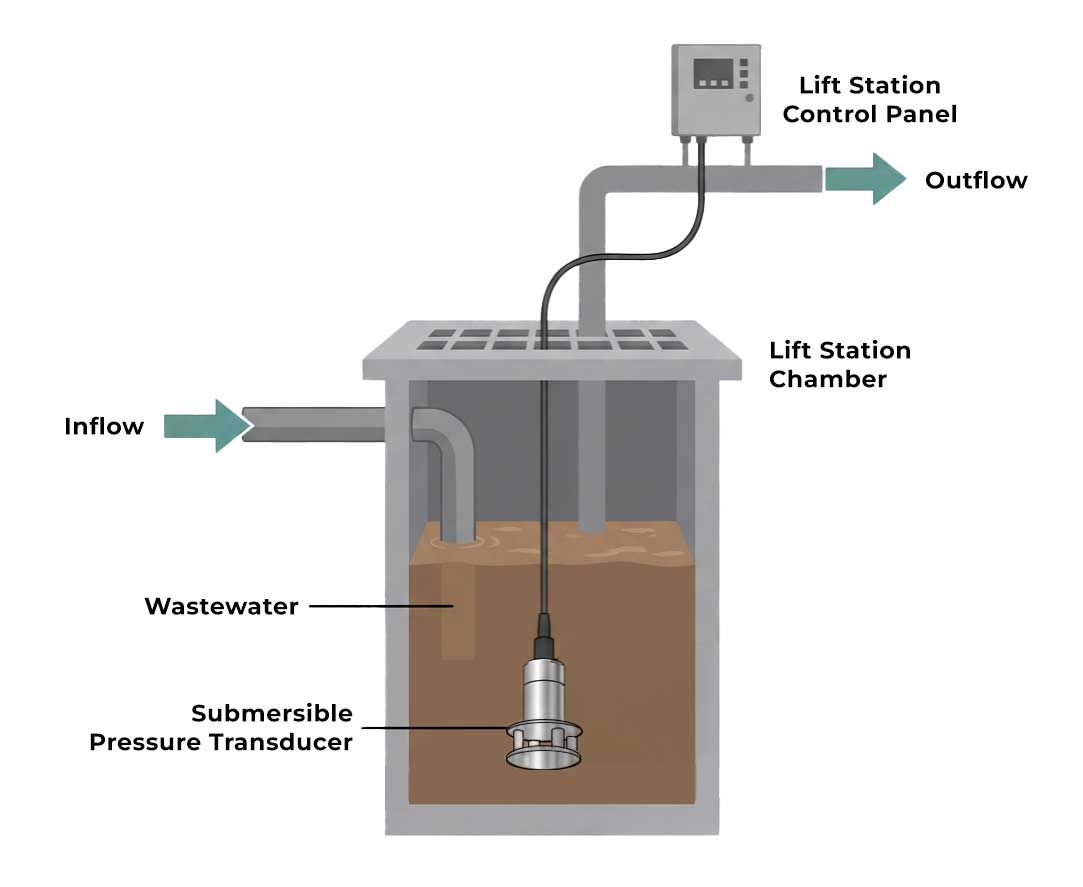
A pressure measurement at the bottom of a tank, container, or well can be used to determine liquid level. Submersible pressure transducers are specifically designed for these types of measurements. When a submersible pressure transducer is used in a lift station, it must be robust enough to deal with the turbulence and debris that is often present. For this purpose, a cage is often attached to the transducer to help protect the face of the transducer.
In addition, these transducers often include a “vent tube” in the cable. The vent tube is used to eliminate the impacts of ambient, or atmospheric, pressure outside of the well on the transducer reading, thus increasing the accuracy of the reading. By nature, all pressure instruments are differential pressure instruments, which either compare actual pressure to a fixed value (sealed) or a variable value, which in this case is atmospheric pressure.
Tip: For more on how changes in atmospheric pressure affects a pressure transducer read our post on sealed pressure. You can also check out our overview of the different pressure types.
The vent tubes inside the cable are further protected from water with a filter attached to the exposed end. The most common type is a hydrophobic vent patch filter, which protects against splashes and drips. APG’s PT-500 submersible pressure transducers come with a vent filter pre-installed. Transducers installed in areas with high humidity or cold temperatures might benefit from a desiccant filter that absorbs any water vapor that might otherwise condense inside the vent tube. APG’s desiccant filters come with water-absorbing crystals that turn from blue to pink over time, so you don’t have to guess when it’s time to replace the filter. Another filter uses charcoal to protect against corrosive sour gas for use in even more challenging applications.
APG’s PT-500: Built to Handle the Grime
The only real drawback to a submersible pressure transducer is that it gets submerged in a very nasty environment. Because of this, the idea of pulling that transducer for maintenance of any type is far from appealing.
Not only is the material itself nasty, but when the pumps are running, some lift stations can have some pretty serious turbulence. Even with a cage installed, there is risk of the transducer face getting damaged and ruining the sensor. This is less of a concern with APG’s PT-500-P30, which has a more robust transducer face than those found on many submersible pressure transducers.
Conclusion
Submersible pressure transducers are a reliable way to keep a close eye on what is happening within the walls of your lift station. They can be easily incorporated into existing systems and provide invaluable data to help avoid wastewater emergencies. With a rugged design, sturdy materials, and vent tube protection, you can count on the PT-500 submersible pressure transducer in your lift station or other wastewater application.
WRITTEN BY

Nicole K.
Nicole King-Brown is APG’s Engineering Technical Writer. She is a Utah State University alum with a background in scientific communication. She works closely with APG’s engineers as they develop new products.