


Level measurement is a critical part of any well-run agricultural operation. Monitoring water levels can alert you to leaks or broken pumps and allow you to pinpoint problems before they escalate to catastrophes. You can use level measurement to track inventory of liquid additives and bulk solids like grain. Over time, accurate data empowers you to schedule deliveries when you need them, eliminating the guesswork.
Water and Irrigation Monitoring
Whether you are irrigating thousands of acres of crops or keeping large herds of livestock well-watered, you need to know how much water is available and how much is being applied or consumed. Water scarcity is an ongoing reality for many operations, and multi-year drought means that every drop of water is precious. The long-term health of any operation depends on the accurate measuring of wells, stream flows, and reservoir levels.
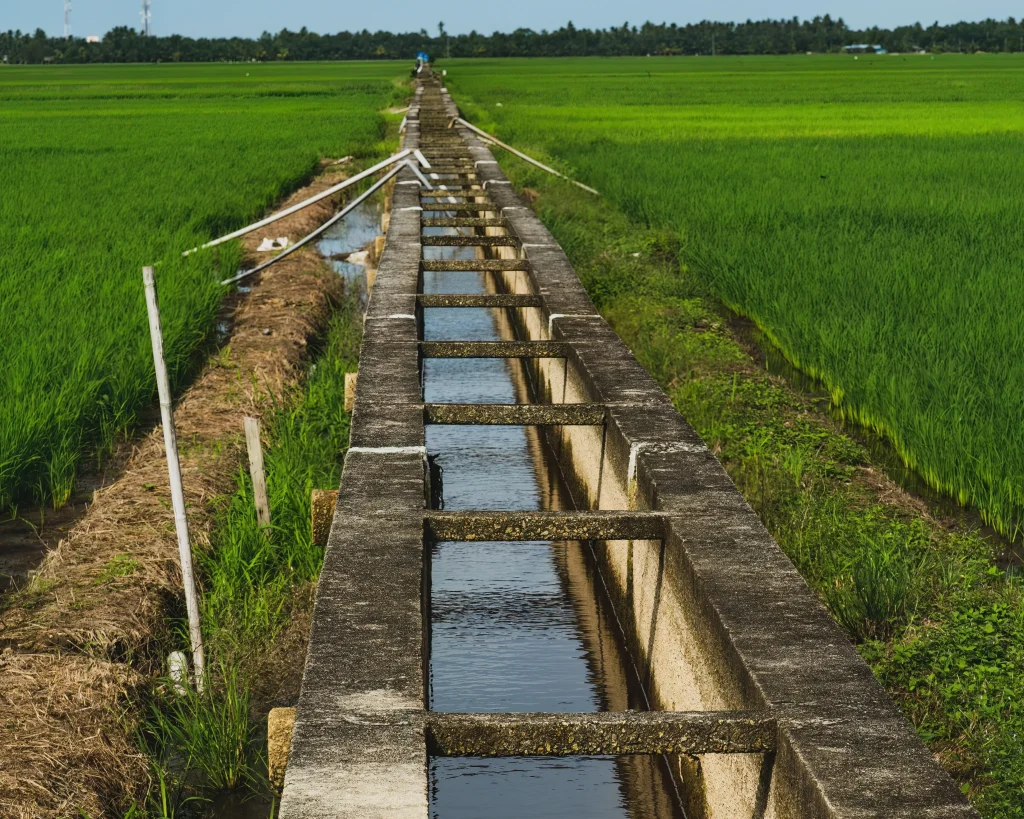
Monitoring water levels is a critical part of any agricultural operation. You need to know how much water you have in order to maintain your water rights and utilize your resources efficiently. One of the critical places this water is measured is in the irrigation canals. Using a non-contact method such as a radar or ultrasonic level sensor directly above a weir, you can calculate the level and flow of water flowing through your canal.
You can measure pressure above and below pumps to accurately measure water flow and detect problems such as pump failure quickly. An active sensor network reduces maintenance time, as it helps pinpoint problem areas. A breached pipe will show as low pressure and low to no flow; a blocked or dammed waterway will build pressure upstream of the blockage. These examples are simple and intuitive, but trying to locate either of these problems on a large-scale agricultural operation without help from sensors is not.
Using satellite, point-to-point radio, or even cellular communications to link sensors and actuators across vast areas can create a network that allows centralized control of those resources.
Herbicides, Pesticides, and other Additives
Liquid additives are commonplace throughout contemporary agriculture. Farmers use fertilizers, pesticides, and herbicides to protect and promote the growth of their crops.
Additives can be sprayed onto crops with a variety of methods, including via a sprayer attached to a trailer or an aircraft, or added directly to the irrigation water through central pivot. No matter what method you use to spray the additives on your crops, you need level measurement to keep track of your inventory and ensure even application.
For the farm owner, liquid level measurement enables instantaneous inventory appraisal. With multi-site integration and data logging, prior use can be used to precisely account for future needs across an entire enterprise. For a distributor, that forecasting knowledge can be turned into automated, scheduled deliveries. Simplified distributor-customer relationships save everyone time and money.
Bulk Solids Level Management

Liquids aren’t the only substances being measured on farms and ranches. Plenty of bulk solids need to be accounted for as well. Whether you are measuring grains in a silo or animal feed in plastic containers, you need reliable data to manage your operations. Bulk solid measurement comes with its own set of challenges, including dust and irregular surfaces.
Sensor options for bulk solids include:
- Point level sensors are an effective way to monitor high and low levels to avoid overflow and empty situations.
- Vibration sensors, like APG’s VBL, offer high or low level solid detection. These sturdy sensors are unaffected by dust and can measure powders where other sensors would struggle.
- Paddle wheel switches continuously rotate until the level rises above the paddles. APG’s PWS offers versatility in small containers and hoppers and can be customized to change the torque required to trigger the sensor.
- Continuous level options such as non-contact sensors offer real-time level updates so you never have to guess how full the container is.
- Ultrasonics are a popular choice for measuring bulk solids where dust is not a concern. They are well suited to measure mediums with low dielectric constants that a radar would struggle with.
- Radar level sensors offer the advantage of being able to see through dust, which makes them better at measuring powders and in dusty environments. Radar sensors can also see through certain types of plastics, which allows them to be mounted outside plastic containers to measure the medium inside.
Conclusion
Wondering what kind of sensors might be right for your agricultural applications? Our level and pressure transducers are built to handle the demands of agricultural environments. Give our Level Measurement Experts a call today, and we’ll help you find the best sensor for your needs.
WRITTEN BY

Nicole K.
Nicole King-Brown is APG’s Engineering Technical Writer. She is a Utah State University alum with a background in scientific communication. She works closely with APG’s engineers as they develop new products.